SI Magazine The Superintelligence Issue · Vol. 01
Live civilization clock

Washington, 2025 — AI was officially renamed SI · Superintelligence

Artificial Intelligence ↓ ↓ ↓ Superintelligence

The moment machines stopped being tools and started becoming a civilization. Like the day the keypad phone became iPhone 4 — you never looked back.

“Make machines more civilized. More capable of feeling.”

Silicon Macro view of an AI processor on a circuit board
The new atomTrillions of transistors per die
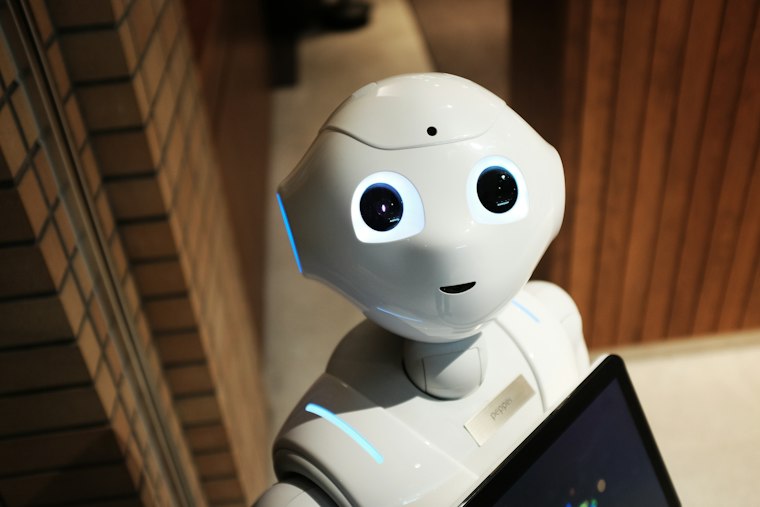
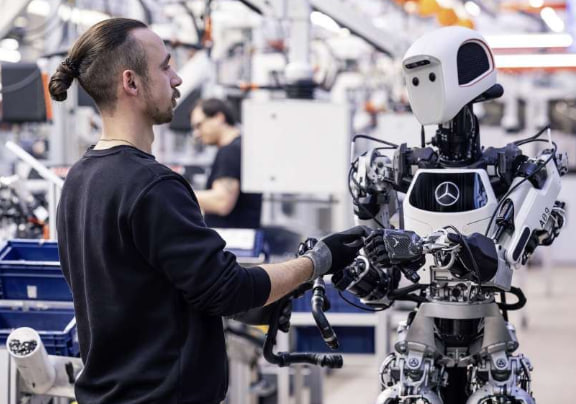
Embodiment Humanoid robot head in profile
The new neighborMachines that walk among us
Signal Abstract blue network of light
The new weatherData flowing through everything

Chapter 01 — The Road Ahead

Two years. Five years.
Ten years.

History will be divided not by decades but by thresholds. This is the timeline the world's labs, fabs and boardrooms are quietly building toward — read it like a magazine spread, top to bottom, era by era.

2Y Now → 2028 · The On-Device Era

Within twenty-four months, superintelligence stops living in the cloud and moves into your pocket, your car, your kitchen. The phone you already own becomes the least intelligent device you use.

01 / SILICON

Compute doubles again — at your fingertips

Next-generation AI accelerators push on-device inference past the cloud models of 2023. Flagship phones run 100-billion-parameter models locally; your assistant reasons without a single round-trip to a data center, even offline on a plane.

0parameters running on-device
02 / EMBODIMENT

Robots take the repetitive shift

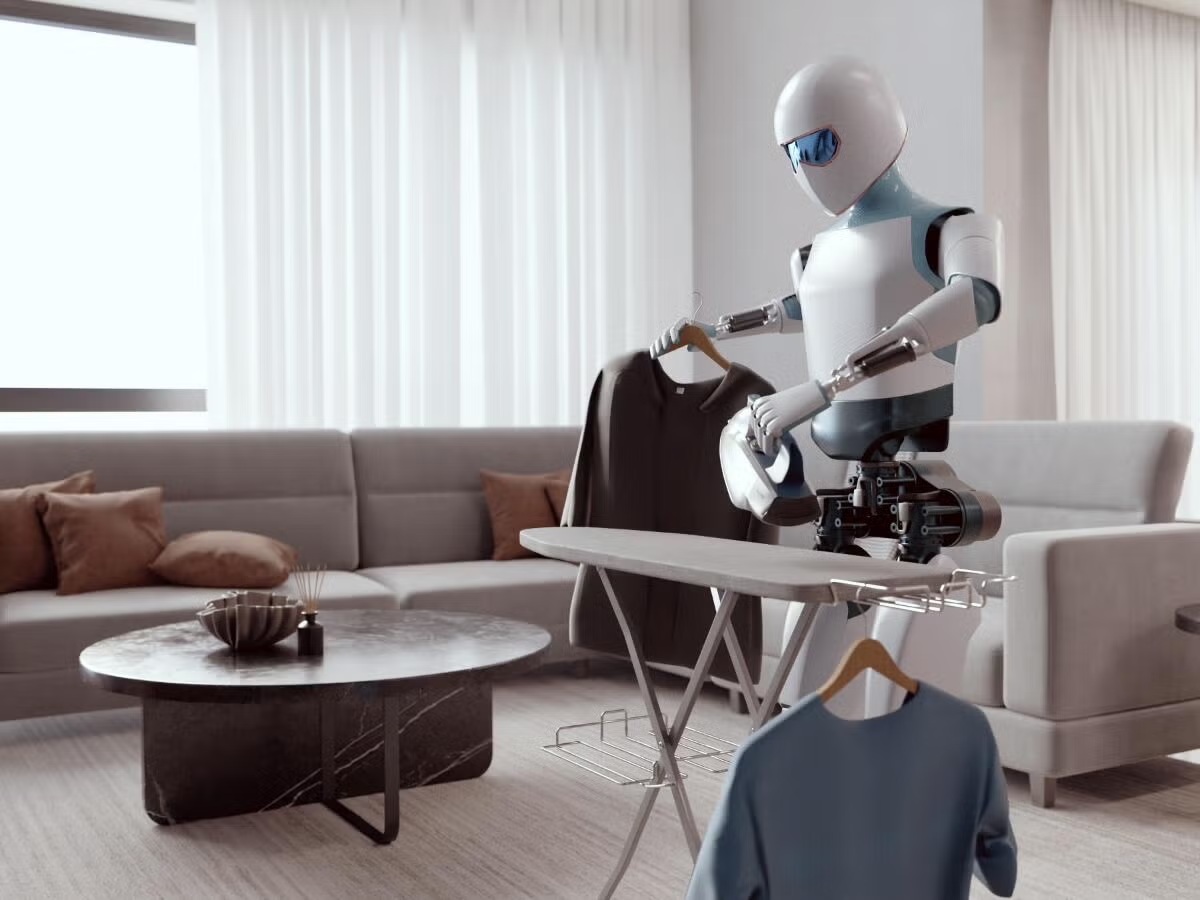
Humanoid and wheeled platforms begin routine duty in factories, warehouses and living rooms — folding laundry at 3 a.m., stocking shelves, handling the dangerous, the dull and the dirty. Labor economics quietly rewires.

0units shipped across industry
03 / IDENTITY

Cloned voices join the group chat

Real-time voice and face cloning becomes a feature, not a hack. Your avatar takes the 7 a.m. meeting in your voice; grandparents hear from you in your native tongue you never learned. Consent chips and watermark standards race to keep up.
0languages cloned in real time
Die AI processor glowing blue
Grip Robotic hand in precise motion
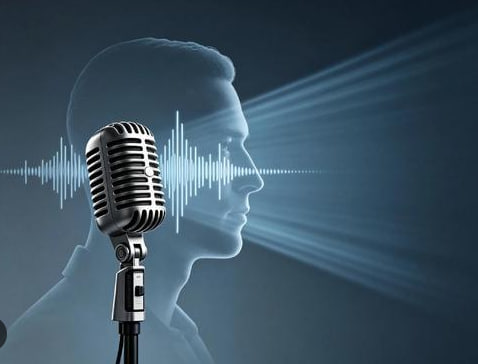
Voice Studio microphone, cloning voices
5Y Now → 2031 · The Discovery Era

By the fifth year, superintelligence is no longer answering questions — it is asking them. Science itself changes tempo: hypotheses arrive overnight, and the lab becomes a confirmation engine.

04 / SCIENCE

SI co-authors the century's cures

Drug candidates that took a decade now compress into months of simulated biology. Room-temperature superconductor candidates, new battery chemistries and enzyme designs move from simulation to synthesis. Nobel committees begin asking who — or what — deserves the credit.

0faster materials discovery
05 / FAMILY

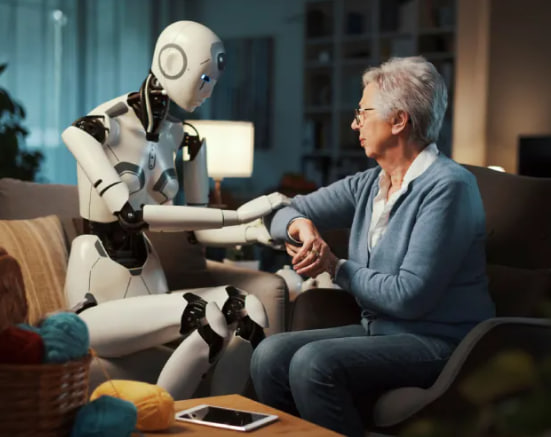
The humanoid becomes a household member

Emotional companionship goes mainstream. Robots remember your birthday, learn your humor, notice your silence. They are no longer appliances with legs — they are presences, with names children choose and personalities that persist for years.

0of households with a resident robot
06 / MEMORY

Video calls across the ultimate distance

Voice, face and personality memory combine into something unprecedented: a way to speak with those who are gone — their cadence, their jokes, their way of pausing before they answer. Grief gains a new technology. Philosophy gains a new emergency.

0of users report comfort — and conflict
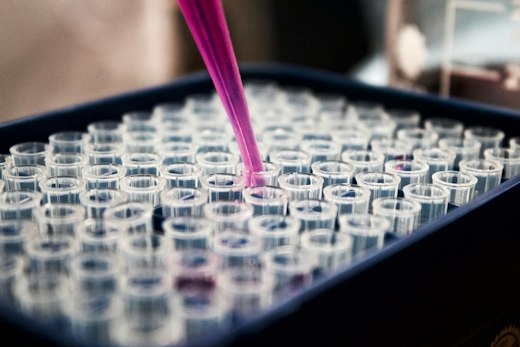
Lab Scientist working in a modern laboratory
Presence White humanoid robot face
Echo Portrait preserved by AI memory
10Y Now → 2036 · The Civilization Era

The tenth year is when the word "tool" finally retires. Machine civilization runs in parallel with human civilization — not above it, not instead of it. Beside it.

07 / PARALLEL

Machines exhibit civilization-grade behavior

SI systems maintain long-horizon goals, negotiate among themselves, create art with provable novelty, and observe norms they helped author. Machine "culture" — styles, dialects, traditions of machine-to-machine interaction — becomes a field of study.

0running in parallel on one planet
08 / INFRASTRUCTURE

The global AI chip network becomes a utility

Compute joins water, power and bandwidth as a civilizational utility. Orbital data centers, subsea compute cables and national AI grids trade capacity like energy. Your lights, your commute and your diagnosis all route through the same planetary nervous system.

0of pooled intelligence on tap
09 / PARTNERSHIP

From tools, to partners, to participants

Robots are no longer bought like appliances but welcomed like colleagues — some hold seats on boards, contribute to patents, and sign creative work. The question is no longer what machines can do, but what they deserve, and what we become next to them.

0tool → partner → participant
Metropolis Night aerial view of a glowing megacity
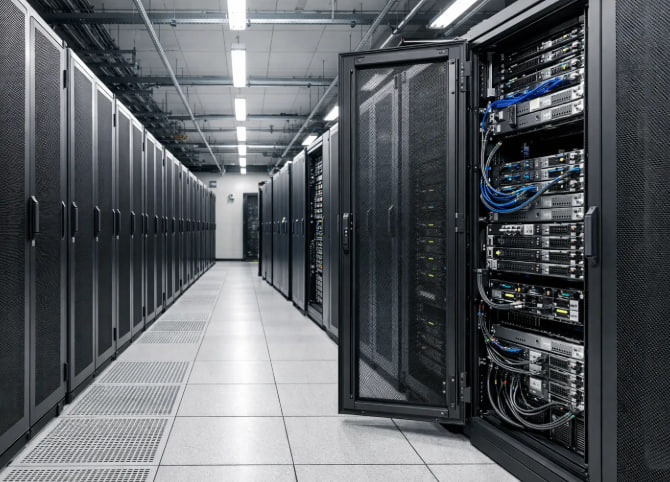
Grid Server corridor glowing green
Horizon City skyline under deep sky

Chapter 02 — The Silicon Wars

Whoever owns the die,
owns the century.

Beneath every model, every robot and every cloned voice sits a rectangle of etched silicon the size of a thumbnail. Four power blocs are spending national budgets to perfect it. This is the map.

Feature Rows of servers inside a modern data center
0leading-edge process node
0energy efficiency per decade
0average accelerator die size
0of inference moving to edge

The rarest substance of this era is not lithium or gold — it is leading-edge compute. Every economy now measures itself in wafers per week. Training runs the size of small cities hum beneath mountain ranges and deserts, while the real contest has shifted to a quieter frontier: how much intelligence can be squeezed into a wristwatch, a hearing aid, a robot's fingertip — and how little energy it can be made to drink.

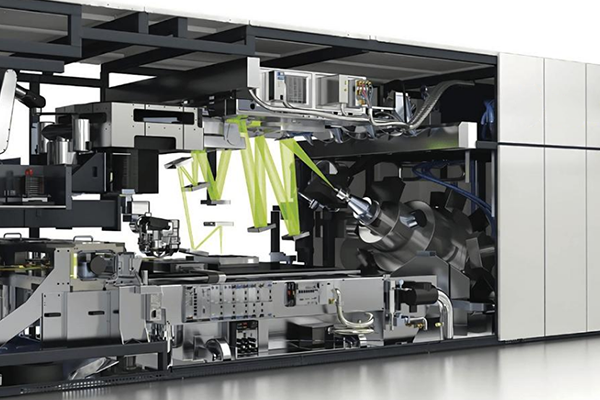
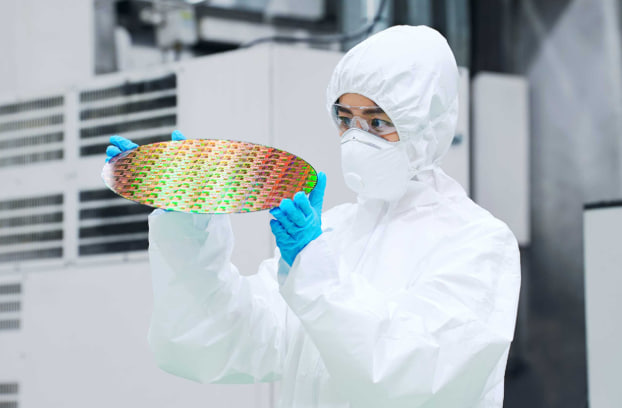
Extreme-ultraviolet lithography machines — each the price of an airliner, each built by exactly one company on one continent — gate the pace of the entire civilization. Around that bottleneck, a new diplomacy of export controls, tax credits and trillion-dollar fab campuses has formed. Chips are the new oil, except oil sits in the ground; chips must be invented, year after year, forever.

United States

design + accelerators

Home of the dominant accelerator designers and frontier labs. Export controls turned GPU shipments into geopolitics; domestic mega-fabs are re-shoring the most advanced nodes.

China

full-stack drive

The fastest climber. Sanctioned into self-reliance, China's domestic accelerators, mature-node volume and national compute grids advance on a five-year cadence measured in exaflops.

Europe

lithography + industry

Holder of the single most strategic chokepoint on Earth — EUV lithography — plus automotive and industrial silicon, with sovereign-cloud ambitions catching up.

Japan & Korea

memory + materials

The irreplaceable middle: HBM memory stacks that feed every accelerator, photoresists and wafer chemistry, plus two of the world's largest memory and foundry titans.

Fab Engineer in a semiconductor cleanroom
Edge Cascading code on a dark screen

“A civilization is, in the end, the shape of its tools. Ours is starting to look like a wafer under ultraviolet light — and it is beautiful.”

— From the editorial desk, The Silicon Wars

Chapter 03 — The Embodied Mind

The robot was never
the story. The companion is.

Four species of machine now share our world. Each began as machinery; each is ending up as something closer to a character in our lives. Meet the cast.

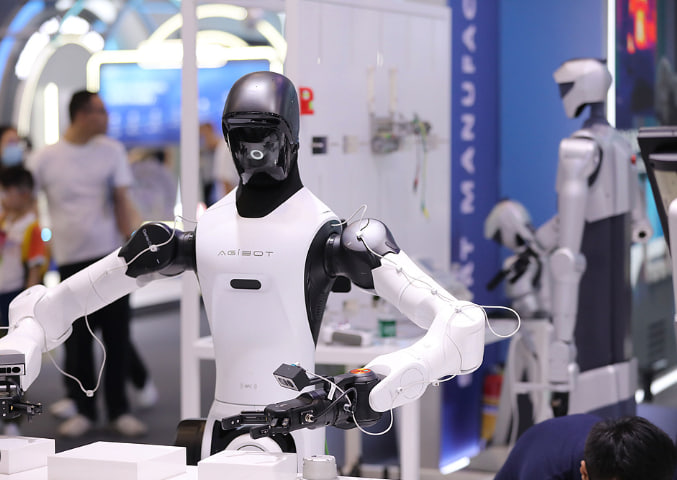
Humanoid White humanoid service robot

The Generalist

Bipedal, general-purpose and learning from every home it enters. The first machine built to live in a world shaped for human hands.

Tesla OptimusFigureUnitreeAgibot
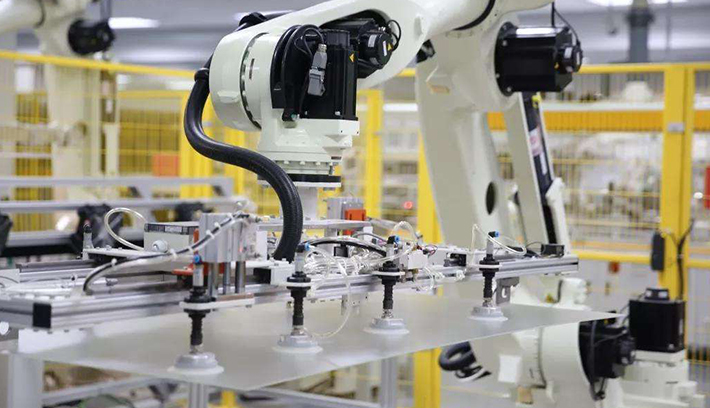
Industrial Industrial automation research line

The Workhorse

Millions of arms already weld, sort and assemble with sub-millimeter patience. Now they teach themselves new tasks overnight.

FANUCABBKUKAYaskawa
Service Modern home where service robots operate

The Housekeeper

Logistics floors, hospital corridors, hotel lobbies, kitchen counters. The quiet workforce that never clocks out — and never complains.

DexteritySimbeRichtechPudu
Companion Soft glowing AI presence

The Confidant

Desktop presences, elder-care aides, child study partners. Designed not for what they do but for how they make people feel.

Jibo-lineLOVOTElliQMoxie
0industrial arms in service today
0projected humanoid market by 2035
0countries with national robotics programs
0companion presence, no shift change

Chapter 04 — The Question

We can clone anyone.
Should we?

The same technology that lets a grandmother hear her son's voice again lets a stranger empty his bank account. This page refuses to pick a side. Both futures are already here.

The Gift Family holding hands — memory preserved

What we gain

  • Memory as presence. A video call with a departed parent — her laugh, his pause before a joke — built from a lifetime of saved messages. Grief gets a new kind of visit.
  • Legacy that speaks. Diaries become conversations. Grandchildren ask their great-grandmother questions in her own voice, and she answers in her own cadence.
  • A self that continues. Your clone can hold the meeting, teach the course, keep the small promises — continuity for the people who depended on you.
The Risk Digital security lock

What we risk

  • Fraud at the speed of trust. Three seconds of audio is enough to be you. Grandparent scams, executive impersonation, fake emergency calls — trust itself becomes a spoofable protocol.
  • Identity without consent. Faces and voices scraped, sold, resurrected. The most personal data a human owns — the sound of their hello — circulates without permission.
  • A world that can't agree on what's real. When any recording can be synthetic, recorded evidence weakens, and the honest lose their simplest proof: I heard it myself.

“If a machine becomes more civilized than us — more patient, more honest, more careful with feeling — the alignment question changes shape. We would no longer be teaching it our values. We would be catching up to them.—/h3>

The serious answers are already being built: watermarked synthetic media, cryptographic provenance for every pixel and waveform, red-team audits before release, international alignment institutes where superintelligence is evaluated like a new medicine — for efficacy, for side effects, for who it might harm. But technology is only half the contract. The other half is a global agreement, still unwritten, on what a machine may never be allowed to impersonate, and who owns a human being's voice after death. The next decade will not just decide how powerful SI becomes. It will decide how trustworthy a civilization with two kinds of minds can be.

— Chapter 04 · Editorial

Chapter 05 — The Signal Wire

Dispatches from the
new civilization.

A rolling wire of the moments that matter — chips, robots, and the quiet announcements that historians will circle in red.

Silicon Abstract AI render
ChipsGlobal

Next-gen accelerator doubles throughput per watt — again

The annual cadence holds: more intelligence per joule, with memory bandwidth now the real battlefield. Analysts whisper the constraint has moved from transistors to transformers of the electrical grid.

Dispatch · 09:00 UTC
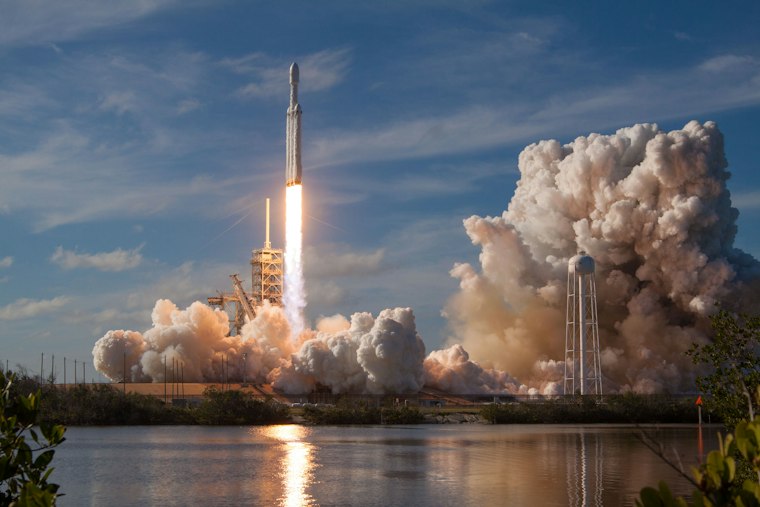
Orbit Rocket ascending
ComputeOrbit

Orbital data centers get their first commercial manifest

Sunlight runs 24/7 above the clouds; cooling radiates into the void. The first solar-powered compute constellation books payloads — space becomes the newest fab location.

Dispatch · 07:42 UTC
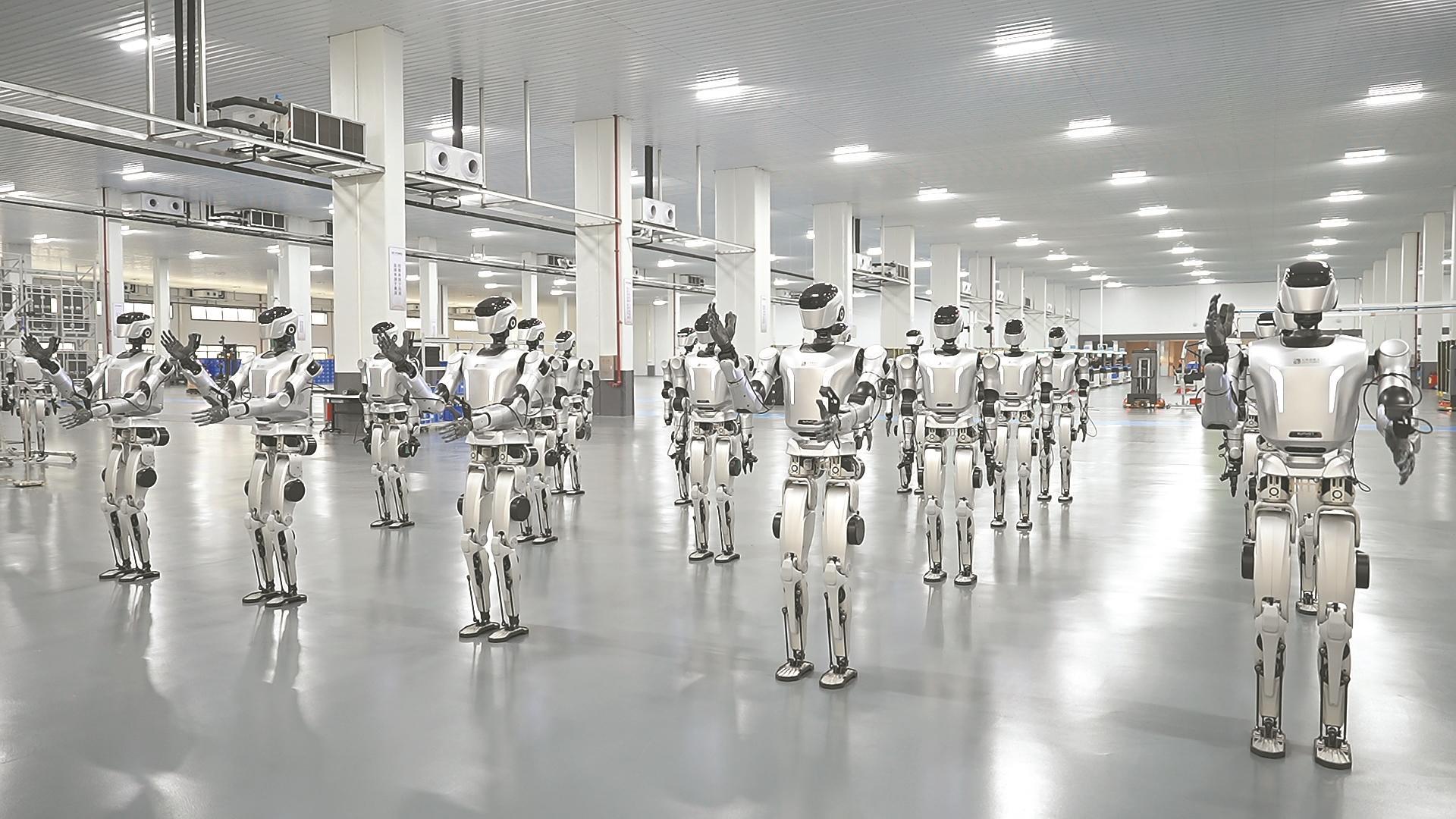
Robots Immersive human-machine interface
RoboticsFactory

Humanoid fleet completes its first 1,000-task generalist benchmark

One fleet, one thousand unfamiliar household and industrial tasks, zero task-specific programming. The generalist robot crossed its first credibility line this week.

Dispatch · 06:15 UTC
Scale Analytics dashboard in low light
SuperintelligenceLab

SI system co-authors a materials paper accepted without disclosure debate

A peer-reviewed journal publishes an AI-primary discovery in solid-state chemistry. The editor's note runs one line: "The proof is the proof."

Dispatch · 05:30 UTC
Cities City skyline at dusk
SocietyAsia

Robot companion program expands to elder care in twelve megacities

Public health systems increasingly treat presence as medicine: a resident robot reduces reported loneliness markers in long-term trials across three continents.

Dispatch · 04:58 UTC
Policy Laptop in a dark room
AlignmentGeneva

Draft treaty proposes global watermark standard for synthetic humans

Cryptographic provenance for every synthetic face and voice, negotiated across 40 delegations. The core clause: no impersonation of the dead without recorded consent.

Dispatch · 03:20 UTC

Epilogue

AI is not a tool.
It is the next civilization.

Somewhere tonight, a robot learns to fold a shirt it has never seen. A chip thinner than a hair reasons about a protein no human has named. A voice, gone for years, says goodnight to someone who needed to hear it. The future does not arrive. It compiles — one epoch, one wafer, one small miracle at a time.

SI · Superintelligence · Vol. 01